

INTECA staff shared lesson learned about the benefits and challenges of virtual assessment (VA) at the International Society for Early Intervention (ISEI) symposium.
Presented at the Bright Start International Conference in November 2024 by Kathy Hebbeler. This presentation explored how authentic assessment is being implemented virtually in early intervention and early childhood special education in the US. The presentation defined virtual assessment and described how and where it is being used in the US. Benefits of virtual assessment … Continue reading Conducting Virtual Authentic Assessment with Young Children with Disabilities

This presentation from the August 2025 OSEP Conference introduced the INTECA framework for adopting and implementing virtual assessment in early intervention and early childhood special education programs.
Examining the why, when, what, and how of effective virtual assessment; best practices for and state experiences with virtual authentic assessment; and addressing existing myths. We presented the results of interviews with Part C and Part B 619 state administrators, local administrators, practitioners, and families who identified the benefits of virtual assessment along with tips and guidance to support the process.
Sharing how programs are implementing virtual assessment along with its benefits and challenges.
Findings around what facilitates successful remote assessment practices, challenges, and recommendations for states and local programs interested in utilizing remote assessment.
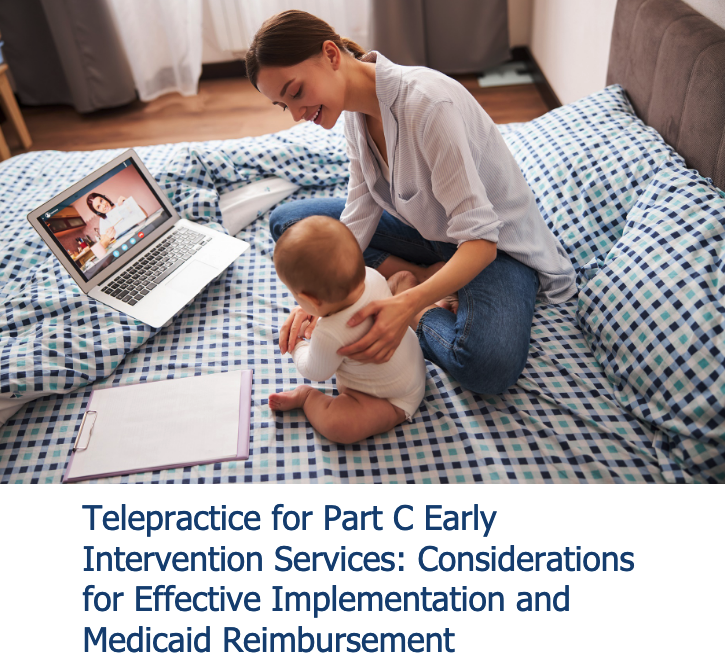
This document can support states in securing Medicaid coverage for telepractice as a method of service delivery beyond the public health emergency of the COVID-19 pandemic. States can use the resource to develop their own state-specific policies and procedures for using Medicaid dollars to reimburse for telepractice.